

Pranayama, a fundamental practice in yoga, involves the control of breath to achieve physical, mental, and spiritual well-being. This ancient technique is divided into three main stages: Purak (inhalation), Kumbhak (breath retention), and Rechak (exhalation). Pranayama is not just a breathing exercise. It is a powerful tool for balancing the body’s energy. It also calms the mind and connects with one’s spiritual essence. The practice uses specific techniques. These regulate the breath and influence the nervous system, heart rate, and overall vitality.
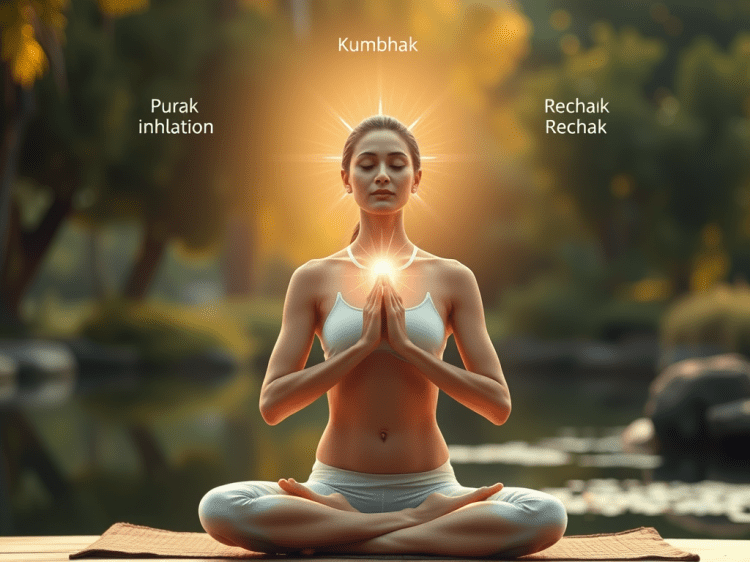
Basic Understanding of Pranayama
Purak (Inhalation): Press the right nostril with the thumb and slowly inhale through the left nostril. During the Inhalation (Purak), meditate on Lord Vishnu in the navel, visualizing a bright, golden light. This Enhances your lung capacity, calms the nervous system, and prepares the body for deeper meditation.
Kumbhak (Retention) : After inhalation, press the left nostril with the ring and little fingers, retaining the breath. While Holding meditates on the four-faced Brahma in the heart, visualizing a radiant, white light. This helps one to enhance body’s energy, enhances concentration, and promotes spiritual growth.
Rechak (Exhalation)
Release the thumb and slowly exhale through the right nostril. While Exhaling Meditate on Lord Shankar in the forehead, visualizing a calm, blue light. This process purifies the body, calms the mind, and prepares for deeper states of consciousness.
There are certain Rules for Practicing Pranayama
- Environment (Avastha): One should always practice in a clean, quiet, and well-ventilated area.
- Posture (Asana): Sit comfortably with your back straight, ideally in a cross-legged position. Or sit in a comfortable posture that allows deep inhalation and exhalation
- Timing (Kaal): Practice on an empty stomach or at least 4-6 hours after a meal.
- Breathing (Svasa): Use the nose for both inhalation and exhalation.
- Consistency (Sthirtha): Practice regularly to experience consistent benefits.
Benefits of Pranayama
- Physical Health:
- Improves respiratory function and overall vitality.
- Enhances digestion and reduces stress-related disorders.
- Mental Clarity:
- Calms the mind and reduces anxiety.
- Improves concentration and focus.
- Spiritual Growth:
- Deepens meditation and spiritual connection.
- Enhances intuition and inner wisdom.
Remember that Pranayama is a powerful tool for achieving balance and harmony in life.
~ Sri Adi Maitreya Rudrabhayananda
 Maitreya Wisdom