
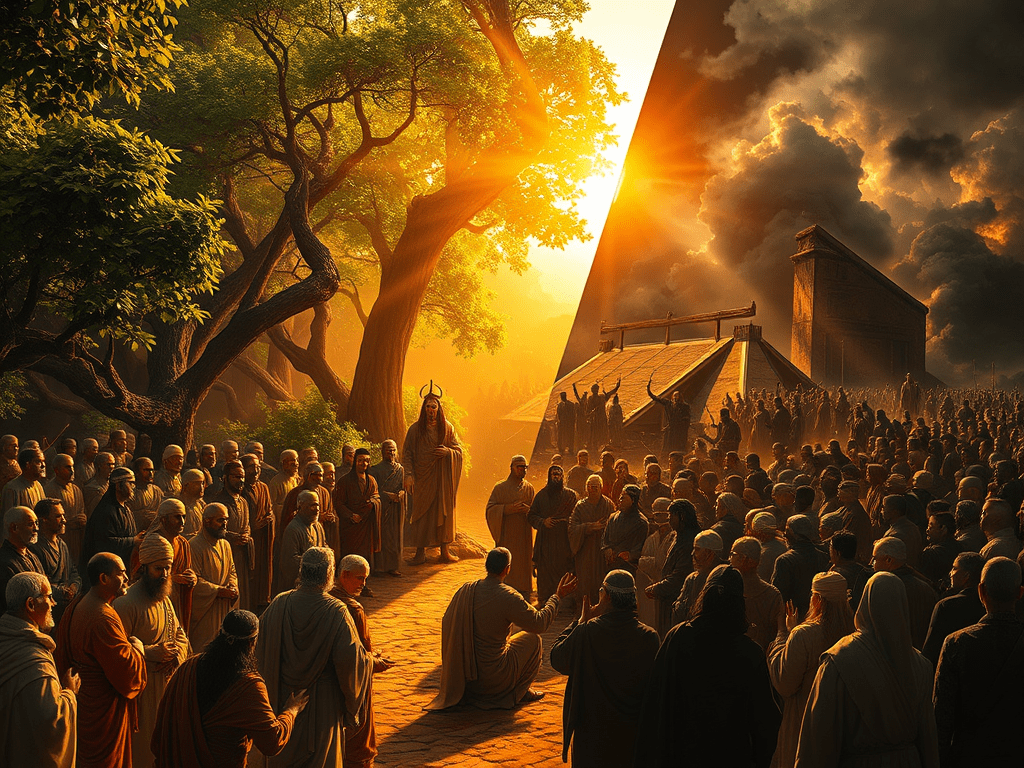
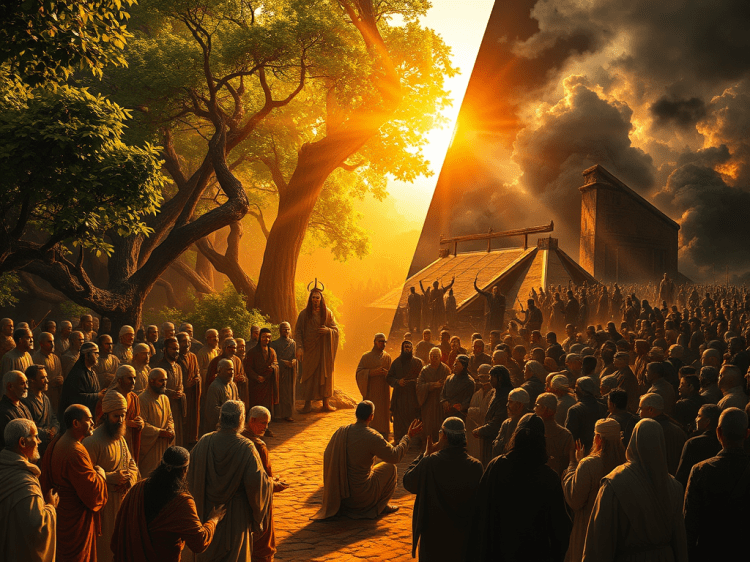
PARAMPARA, or lineage, signifying a continuity of knowledge that connected individuals through a shared ancestry of thought and practice. This approach was not confined to any one culture or region. It was a universal practice obvious in various ancient societies long before the advent of later religions. The paramount aim of this lineage was to foster a society. Relations were grounded in voluntary exchanges. These exchanges were imbued with principles of spirituality, scientific inquiry, and economic collaboration. Such an approach created an environment ripe for peaceful change. Progress was realized through harmony.
Nonetheless, with the advent of many other recent religions, the sociocultural landscape underwent a profound transformation. The core philosophies that defined human interactions and societies shifted radically. Faith-based doctrines took precedence, often overshadowing the earlier emphasis on rational discourse and empirical understanding. Messages became fixed, rigid, and oftentimes inconsistent with the original intentions of spiritual teachings.
This transition led to a significant decline in informed debate. As a result, the populace became increasingly reliant on rituals and beliefs. Often, they lacked a foundational understanding of their significance or purpose. Many individuals became trapped in a cycle of adherence to prescribed traditions. These traditions often lacked any meaningful connection to their lives. Theologians and religious leaders established a framework. They prioritized submission over inquiry. This promoted adherence to dogma even when evidence or reason suggested otherwise.
The consequences of this shift have been manifold. As beliefs became entrenched, differences in interpretation often erupted into violence and conflict. Religious factions no longer merely clashed over differing views; they framed their disputes as battles between good and evil. This absolutism granted a cosmic gravitas to their arguments, effectively eliminating any potential for peaceful resolution. In such a climate, violence was not just an option; it became a perceived necessity for defending the faith.
The fragility of religious convictions underscores the notion of organized religion. At its core, organized religion often thrives on creating divisions and hierarchies. It manipulates the collective fears and aspirations of the masses. This reliance on faith over intellectual engagement has, unfortunately, fostered an environment. Individuals harbor doubts about their beliefs, but they hesitate to express them. The fear of confronting the implications of these doubts creates a repressive environment. In this environment, questioning is seen as a threat to their identity. Their identity is built on fragile pretenses.
Organized religions can serve the interests of the powerful. They provided a convenient apparatus for control and domination over the common populace. By consolidating power within a few, those in authority can keep influence and stifle dissent. In contrast, the ancient lineage system offered a more egalitarian approach. It invited collaboration and recognized the intrinsic value of diverse thoughts and practices.
To envision a path forward, it is essential to disentangle spirituality from the confines of organized religion. This encourages individuals to explore beliefs and practices freely and authentically. When people are encouraged to engage with spirituality personally, without the coercive structures of organized religion, they experience greater liberation. They also find a connection to their own truths. Such an open exploration fosters deeper understanding, compassion, and a more profound sense of community.
The juxtaposition of ancient lineage and modern organized religion illustrates the evolution of societal frameworks. We should reflect on history’s lessons. It becomes evident that we should foster a society based on inquiry, dialogue, and shared spiritual exploration. This approach holds the potential for healing divisions. It also promotes peace. We can embrace the wisdom of our ancestors. They understood the value of voluntary exchanges. They also recognized the deeper connections between humanity. By doing so, we can forge a path toward a more harmonious future.
~ Sri Adi Maitreya Rudrabhayananda ji (Sri AMaRa ji)
Soul Searchers intends to raise the consciousness of 20 million people. It aims to help create a turning point on this planet. It envisions a world where people are in tune with their inner selves. They will live healthy and creative lives. They will no longer be swayed by religious dogma or politics. The purpose is to restore the state of righteousness (dharma). This is crucial in the current state of political turmoil. It also addresses selfishly motivated people. We believe the truth can be known and realized through guided and workable ways.
#Maitrya#Adimaitreya#Diksha#Awakening #Parampara #Lineage #maitreyaschoolofwisdom #मैत्रेयस्कूलऑफविज़डम #Guru #agoramaitreya #मैडिटेटिंगविथमैत्रेया #रुद्राभयानंद#Rudrabhayananda#मैत्रेय#ucsrd#Maitreya
 Maitreya Wisdom